
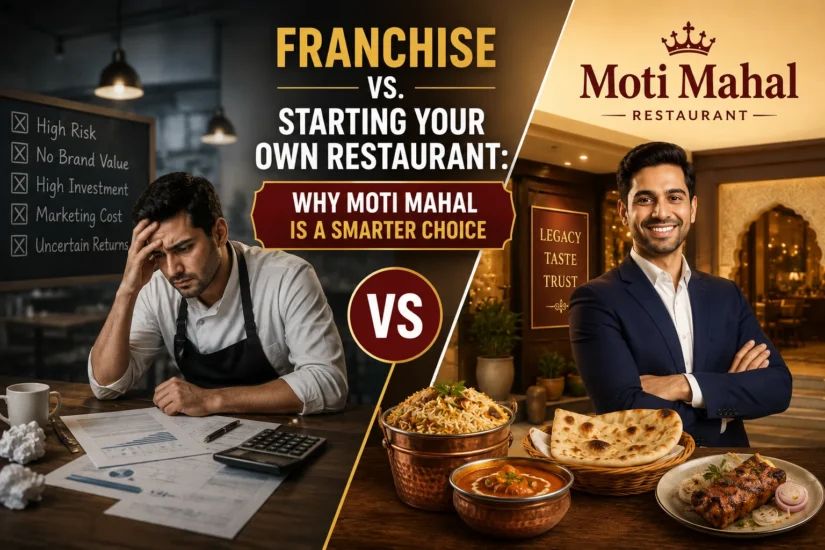
Franchise vs. Starting Your Own Restaurant: Why Moti Mahal Is a Smarter Choice
Starting a restaurant sounds exciting. You have your own menu, your own interiors, your own name on the board and, most importantly, the freedom to build something from scratch.
But anyone who has actually worked in the restaurant business will tell you that there is a lot more happening behind the scenes.
Finding the right location, creating a menu, hiring kitchen staff, training the team, managing food costs, building a customer base, promoting the restaurant and keeping the quality consistent every day can be difficult. Even a restaurant with good food can take time to become known.
This is where the question of starting your own restaurant vs. taking a restaurant franchise in India becomes important.
A franchise gives an entrepreneur the opportunity to operate under an established brand rather than starting everything from zero. And when the brand already has a long history, recognizable products and an established operating system, the learning curve can be very different.
For entrepreneurs considering the food business, Moti Mahal franchise is one option worth looking at.
Moti Mahal has been part of India’s culinary story for more than a century. The brand traces its origins to 1920, when Kundan Lal Gujral started Moti Mahal in Peshawar. Today, under the leadership of Monish Gujral, the brand has developed franchise formats and expanded its presence across different markets.
So, what makes a franchise different from opening your own restaurant?
Let’s look at it in a simple way.
Starting Your Own Restaurant: The Freedom Comes With Responsibility
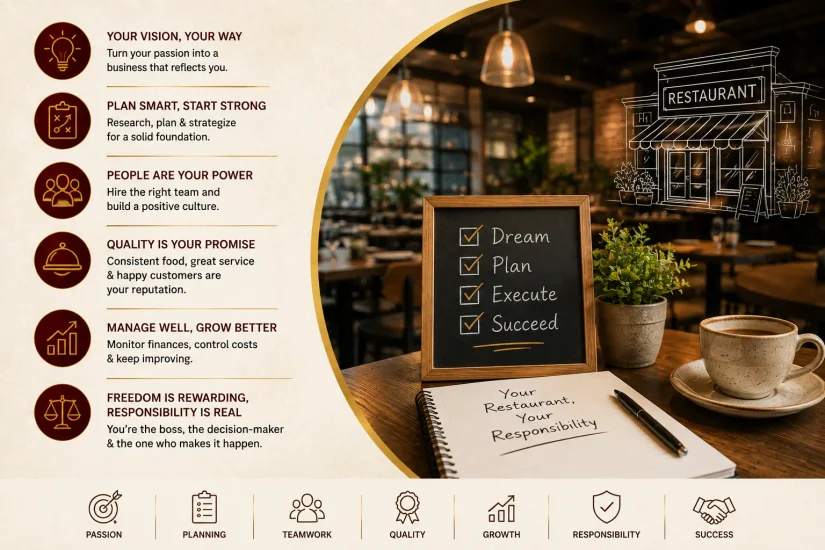
When you open an independent restaurant, almost everything starts with you.
You have to decide what the restaurant will be called, what food it will serve, how much customers will pay, what the interiors should look like and how the business will be promoted.
That freedom is definitely attractive.
But it also means that every mistake becomes your responsibility.
If the menu does not work, you have to change it.
If customers don’t know the restaurant exists, you have to build awareness.
If kitchen operations are slow, you have to find the reason.
If food quality changes from one day to another, you have to fix the system.
For someone with strong restaurant experience and a clear concept, this can be an exciting challenge.
For a first-time restaurant entrepreneur, however, it can become overwhelming.
What Does a Restaurant Franchise Change?
A restaurant franchise works differently.
Instead of creating an entirely new brand, you become a business partner of an existing brand and operate according to an agreed business model.
You still have to invest money, manage employees, understand your market and run the outlet properly. A franchise is not a shortcut to guaranteed success.
The difference is that you are not starting with a completely blank page.
You have a brand identity, established recipes, operating systems, training and other forms of support depending on the franchise agreement.
This can remove some of the guesswork involved in launching a restaurant.
Moti Mahal’s own franchise material highlights areas such as training, site development guidance, marketing support, operational audits and supply-chain or vendor assistance as part of its franchise support structure.
Why Brand Recognition Matters in the Restaurant Business
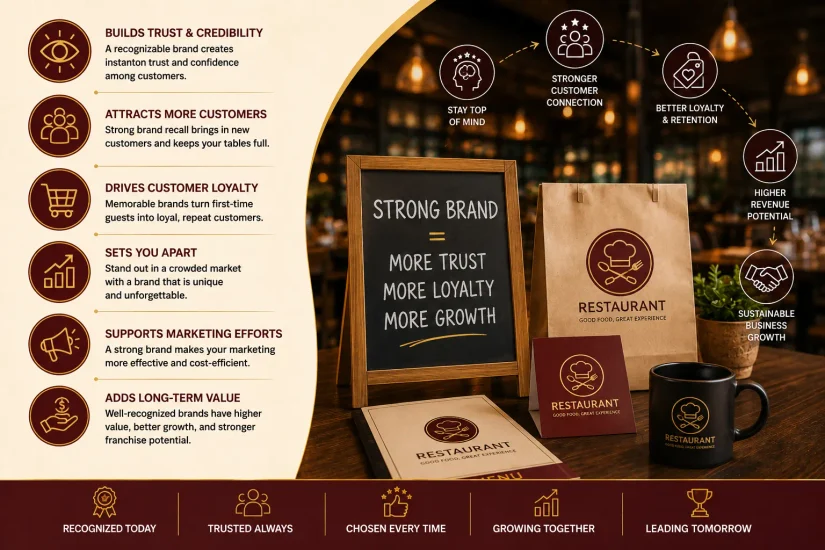
Think about opening two restaurants in the same neighbourhood.
One has a completely new name that nobody has heard before.
The other operates under a brand that customers may already recognize.
The second restaurant does not automatically become successful, but it can have an advantage when it comes to getting people to notice the business.
This is especially important during the early months.
Building recognition for an independent restaurant can take a lot of time and marketing effort. A franchise can give the entrepreneur an existing identity to work with.
Moti Mahal is particularly interesting in this area because its name is connected with a long culinary history and signature North Indian dishes that have been associated with the brand for generations.
You Don’t Have to Create the Menu From Zero
One of the biggest jobs in a new restaurant is creating the menu.
It sounds simple until you actually start doing it.
You have to decide:
What dishes should be included?
What should each dish cost?
Which ingredients are required?
How much should each portion contain?
How long should the food take to prepare?
Which dishes should become signatures?
How can the same taste be maintained every day?
A franchise can reduce much of this initial experimentation.
With Moti Mahal, the franchisee gets access to an established food concept and recipes associated with the brand. The company’s history of standardizing recipes has also been documented as part of its approach to franchise expansion.
That does not mean there is no room for local understanding.
Customer preferences still matter.
Location still matters.
Pricing still matters.
But you are starting with an established culinary foundation rather than developing every dish from scratch.
Training Can Make a Big Difference
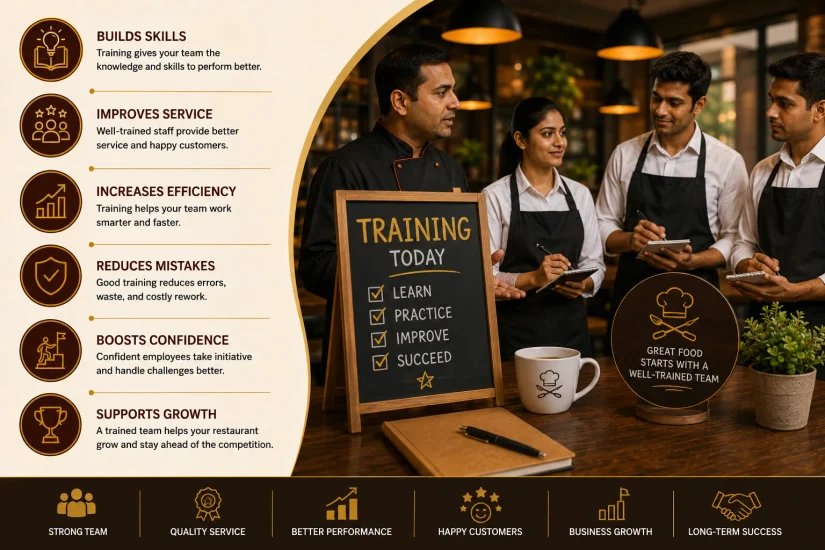
A restaurant is only as good as the people running it.
You may have a beautiful restaurant and a strong menu, but if the kitchen team does not understand the recipes or the service staff is not properly trained, customers will notice.
Training is therefore one of the areas where franchise businesses can have an advantage.
Moti Mahal states that its franchise partners receive training and setup assistance as part of the franchise process.
For a first-time entrepreneur, having access to an established system can make the early stages less confusing.
You can learn how the kitchen should operate, how the menu should be handled and what standards need to be followed.
Different Restaurant Formats Give Entrepreneurs More Choice
Another interesting part of the Moti Mahal franchise model is that the business is not limited to one type of restaurant.
The company has developed different formats for different locations and customer requirements.
Its franchise portfolio includes concepts such as Tandoori Trail Express, Kebab Trail, China Trail, Lounge By Nite and Freshly’s, among others.
This matters because not every entrepreneur has the same budget or access to the same type of property.
A mall location may work better with a kiosk or quick-service format.
A large high-street property may suit a full restaurant.
A premium neighbourhood may support a fine-dining concept.
The format needs to match the location, customer profile and investment capacity.
A Franchise Can Reduce the “What Do I Do Next?” Problem
One of the most difficult parts of opening an independent restaurant is simply knowing what comes next.
You find a property.
Then what?
Do you start the interiors?
Do you hire the chef?
Do you finalize the menu?
Do you start social media?
Do you order equipment?
Do you recruit staff?
Do you launch immediately?
There are dozens of decisions.
An established franchise system can provide a clearer roadmap.
Moti Mahal’s published franchise process includes application, evaluation, agreement and planning, training and setup, followed by the outlet launch.
That structure can be particularly useful for entrepreneurs entering the restaurant industry for the first time.
Marketing a New Restaurant Can Be Expensive
Marketing is another area where independent restaurant owners have to start from the beginning.
They need to create a brand identity, photography, social media content, promotional campaigns, local awareness and customer acquisition strategies.
A franchise starts from a different position.
The brand already has an identity and marketing assets that can be used as part of the franchise system.
Moti Mahal’s franchise information also mentions marketing strategies and national campaigns among the support provided to franchise partners.
However, local marketing still matters.
A restaurant in Mumbai may need a different approach from one in Jaipur or Bengaluru.
Understanding the local audience remains the responsibility of the franchise operator and local team.
Moti Mahal Has Already Experimented With Different Formats
One thing that can be easy to overlook when choosing a restaurant franchise is the importance of format experimentation.
Customers do not always eat out in the same way.
Some want a proper family dinner.
Some want a quick meal in a mall.
Some prefer takeaway.
Others want a premium dining experience.
Moti Mahal has experimented with different restaurant formats over the years, including fine dining, kiosks and specialized food concepts. Its own published material discusses adapting formats to different markets and demographics.
This kind of experience can be useful for an entrepreneur who wants to understand how a food brand can work across different locations.
But Is a Franchise Really Better Than Your Own Restaurant?
Not necessarily for everyone.
This is important to understand.
A franchise still requires investment.
You still have to deal with rent, employees, food costs, utilities, licences, local competition and daily operations.
You also have to follow the franchise agreement and maintain brand standards.
An independent restaurant gives you more freedom.
A franchise gives you more structure.
The better option depends on the entrepreneur.
But for someone who wants to enter the food industry without building every part of the business from the ground up, a well-established franchise can make the process more organized.
The Biggest Advantage: You Are Investing in a brand
It is easy to think that a franchise means simply putting a famous name above your restaurant.
It is much more than that.
You are also getting access to a business system.
That can include:
- Brand identity
- Established recipes
- Menu development
- Operational processes
- Staff training
- Restaurant setup guidance
- Marketing support
- Supplier or sourcing assistance
- Quality standards
- Ongoing operational guidance
The exact support depends on the franchise model and agreement, so potential franchisees should always discuss the details directly with the franchisor before making an investment.
What Makes Moti Mahal Different?
For Moti Mahal, the biggest differentiator is arguably its combination of heritage and a franchise-oriented business model.
The brand’s story goes back to 1920, while its modern expansion has involved formalizing recipes, processes and restaurant formats.
This combination is important.
A heritage brand without a strong operating system can struggle to expand.
A strong operating system without a memorable brand may struggle to attract customers.
Moti Mahal has spent years working on both sides.
Its published history describes the move toward standardized recipes and formal business structures as part of the expansion journey under Monish Gujral.
What Should You Check Before Taking Any Restaurant Franchise?
Before investing, don’t make the decision only because you like the food or recognize the brand.
Do your own homework.
Ask about:
Total Investment
Understand the complete cost, not just the franchise fee.
Include interiors, equipment, deposits, licences, initial inventory, staff recruitment and working capital.
Location
A good brand cannot completely compensate for a poor location.
Study footfall, nearby competition, parking, accessibility and the type of customers living or working around the property.
Franchise Agreement
Read the agreement carefully.
Understand the duration, renewal terms, royalty, territory rights, marketing obligations and exit conditions.
Training and Support
Ask exactly what training is provided and for how long.
Also understand what happens after the restaurant opens.
Supply Chain
Ask how ingredients and other supplies are sourced and whether specific vendors are mandatory.
Expected Timelines
Do not assume that every outlet will reach profitability at the same speed.
Restaurant performance depends heavily on location, rent, pricing, customer demand, operational control and many other factors.
Franchise vs. Own Restaurant: A Simple Comparison
| Factor | Own Restaurant | Moti Mahal Franchise |
| Brand name | Build from scratch | Established brand |
| Menu | Create yourself | Established concepts and recipes |
| Business system | Develop yourself | Existing franchise framework |
| Marketing | Build your own strategy | Brand-level support may be available |
| Training | Arrange independently | Franchise training and guidance |
| Flexibility | Very high | Works within franchise standards |
| Customer awareness | Takes time to build | Existing brand recognition can help |
| Expansion | Build everything yourself | Can explore established formats |
The table makes one thing clear: neither model is completely risk-free.
The real question is whether you want to build a restaurant brand from zero or operate within a system that has already been developed and tested over time.
Who Should Consider a Moti Mahal Franchise by Monish Gujral?
A Moti Mahal franchise may be worth considering for entrepreneurs who:
- Want to enter the restaurant business
- Prefer an established food brand
- Like North Indian and Mughlai cuisine
- Want structured operational support
- Are comfortable following brand standards
- Have the financial capacity to invest and maintain working capital
- Are willing to be involved in day-to-day restaurant operations
You don’t necessarily need to be a professional chef.
But you do need to understand that owning a restaurant is an active business.
A franchise can provide the system. The franchisee still has to execute it properly.
Why Moti Mahal Can Be a Smarter Starting Point
Starting your own restaurant can be rewarding, but it requires you to solve every problem yourself.
You have to create the brand.
You have to develop the recipes.
You have to build customer trust.
You have to establish operating procedures.
You have to figure out marketing.
You have to make mistakes and learn from them.
With a franchise such as Moti Mahal, many of these foundations already exist.
The brand brings a long culinary history, established food concepts, multiple formats and a franchise support structure. Moti Mahal’s website currently highlights more than 100 successfully running outlets worldwide across its franchise ecosystem.
That does not guarantee that a franchise outlet will succeed.
But it can give an entrepreneur a stronger starting point than building an entirely new restaurant brand without an established system.
Final Thoughts
There is no single right answer for every restaurant entrepreneur.
If you have a completely original restaurant idea, strong industry experience and want complete creative control, starting your own restaurant may be the right path.
But if you want to enter the food business with an established brand, recognizable cuisine and an existing business framework, franchising can be a more practical route.
For entrepreneurs considering a restaurant franchise in India, Moti Mahal offers something that is difficult for a new restaurant to create quickly: a combination of culinary heritage, established recipes, brand recognition and experience with different restaurant formats.
The idea is simple.
Instead of spending years building everything from zero, you can start with a foundation that has already been developed.
That is what can make a Moti Mahal franchise a smarter choice for the right entrepreneur.
Frequently Asked Questions
It depends on your experience, investment capacity and business goals. An independent restaurant offers more creative freedom, while a franchise provides an established brand and business framework.
Moti Mahal combines a long culinary heritage with established recipes, different restaurant formats and franchise support. The brand’s origins date back to 1920.
Moti Mahal’s published franchise information states that prior F&B experience is not necessarily required. However, franchisees still need strong business involvement and should understand the responsibilities of operating a restaurant.
Moti Mahal has developed different formats, including restaurant, kiosk and specialized concepts. Available options can vary, so potential franchisees should confirm current models directly with the company.
Yes. The company’s published franchise information mentions training for kitchen, service and management along with setup guidance.
Franchise availability depends on the location, market potential, territory and the company’s approval process. You can contact Moti Mahal directly to discuss your preferred city and business plan.
No restaurant franchise can guarantee profitability. Performance depends on factors such as location, investment, rent, customer demand, pricing, operations and management. Prospective franchisees should evaluate the opportunity carefully before investing.
Interested in Starting a Moti Mahal Franchise?
If you have been thinking about starting a restaurant but don’t want to build an entire food brand from the beginning, exploring a Moti Mahal franchise could be worth your time.
You can learn more about the franchise opportunity, available formats and application process on the official Moti Mahal website.
Visit: Moti Mahal Official Website
Speak with the Moti Mahal team, understand the investment and franchise terms, evaluate your location and decide whether the business model fits your goals.
A restaurant is still a serious business. But with the right brand, the right location and the right approach, you don’t always have to start from an empty kitchen.