
Moti Mahal Franchise by Monish Gujral
Starting a restaurant sounds exciting when you think about the good parts.
A busy dining room. Happy customers. A popular menu. A brand people remember.
But anyone who has spent time around the restaurant business knows there is another side to it. Staff have to be managed. Ingredients have to arrive on time. Food quality needs to stay consistent. Customers expect the same experience every time. Even a small problem in the kitchen can affect the whole evening.
This is where a restaurant franchise can be very different from starting a restaurant completely on your own.
And this is also where the Moti Mahal franchise by Monish Gujral takes an interesting approach.
Moti Mahal is not simply offering its name, menu and logo to franchise partners. The brand has built a franchise system around ownership, operational support and the preservation of its food identity.
One of the most interesting parts is its FOCO Hybrid model — Franchise Owned, Company Operated. Under this model, the franchise partner owns the business while the company takes responsibility for the day-to-day restaurant operations. Moti Mahal describes this as a model introduced and innovated by Monish Gujral.
So, what actually makes this franchise different?
Let’s look at it without making it complicated.
1. You Are Not Starting a Restaurant Brand From Zero
One of the hardest things about opening an independent restaurant is getting people to notice you.
Imagine opening a new restaurant in a city where there are already hundreds of options.
Before the first customer walks through the door, you have to answer questions like:
- What should the restaurant be called?
- What kind of food should it serve?
- How should the menu be designed?
- What pricing will work?
- How will people discover the restaurant?
- How will you build trust?
- What will make customers come back?
A franchise changes some of that equation.
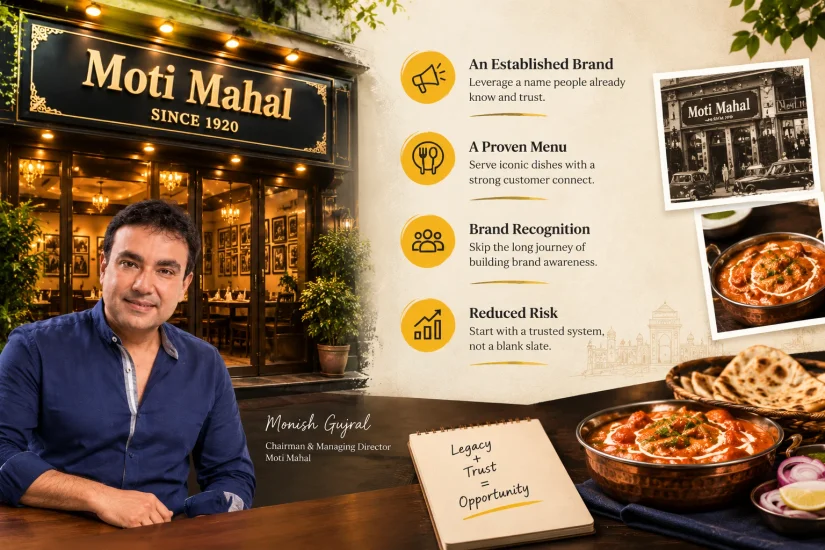
Moti Mahal already has a name associated with Indian cuisine and dishes such as Butter Chicken, Tandoori Chicken and Dal Makhani. Its history goes back to Kundan Lal Gujral, who established Moti Mahal in 1920.
That doesn’t mean a franchise automatically becomes successful. Location, management, customer service and finances still matter.
But you are not trying to create a brand identity from nothing.
That is a major difference.
2. Monish Gujral’s Approach Is About More Than Expansion
When a restaurant becomes popular, expansion seems like the obvious next step.
Open another outlet.
Then another.
Then move into another city.
But expanding a food brand is not as simple as putting the same signboard on another building.
The food has to remain familiar. The service needs to follow the brand’s standards. Staff need to understand the system. Suppliers need to be reliable.
Monish Gujral’s role in the development of Moti Mahal has been connected with taking the brand beyond its earlier Delhi presence and building a larger franchise and restaurant network. The company’s own history says Moti Mahal Management Services was established in 2003 with the objective of developing the brand through a franchisor-franchisee system.
That part is important because it shows that franchising was not simply added as a quick way to sell more outlets.
A system was created around it.
3. The FOCO Hybrid Model Is Probably the Biggest Difference
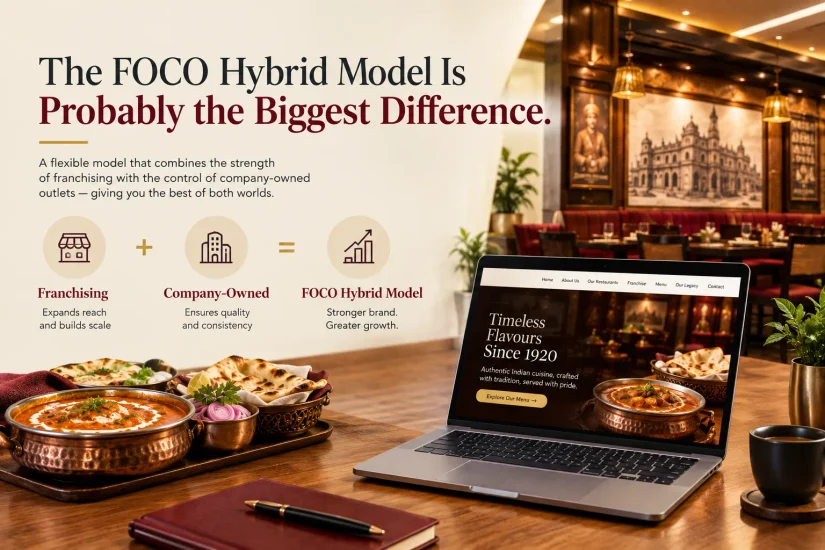
This is the part that makes the Moti Mahal franchise particularly interesting.
FOCO stands for Franchise Owned, Company Operated.
In a traditional franchise arrangement, the franchisee may have to be heavily involved in running the outlet.
Hiring people.
Training them.
Managing the kitchen.
Checking stock.
Handling customer complaints.
Monitoring costs.
Making sure the restaurant opens and closes properly.
That can become a full-time job.
With the Moti Mahal FOCO Hybrid model, the franchisee owns the outlet while the company’s team manages the restaurant operations. The official franchise information says the company handles areas such as staffing, quality control and day-to-day management.
For an investor who wants to enter the restaurant industry but does not want to personally manage a kitchen every day, this can be an important distinction.
Of course, the exact responsibilities, fees, investment and commercial terms should always be discussed directly with Moti Mahal before making a decision.
4. The Brand Is Built Around Food People Already Know
There are many restaurant franchises in India.
But food franchises have one problem that some other businesses don’t have.
People remember taste.
A customer may forget the exact design of a restaurant.
They may not remember the name of the manager.
But if they have eaten a particular dish for years and suddenly it tastes completely different, they notice.
Moti Mahal has built its identity around dishes that have become widely associated with North Indian cuisine.
The brand’s official history highlights Tandoori Chicken, Butter Chicken and Dal Makhani as part of its culinary legacy.
That gives a franchise outlet something useful from day one — a menu with an existing identity.
The challenge then becomes protecting that identity while operating in a modern restaurant environment.
5. Consistency Becomes a Business Tool
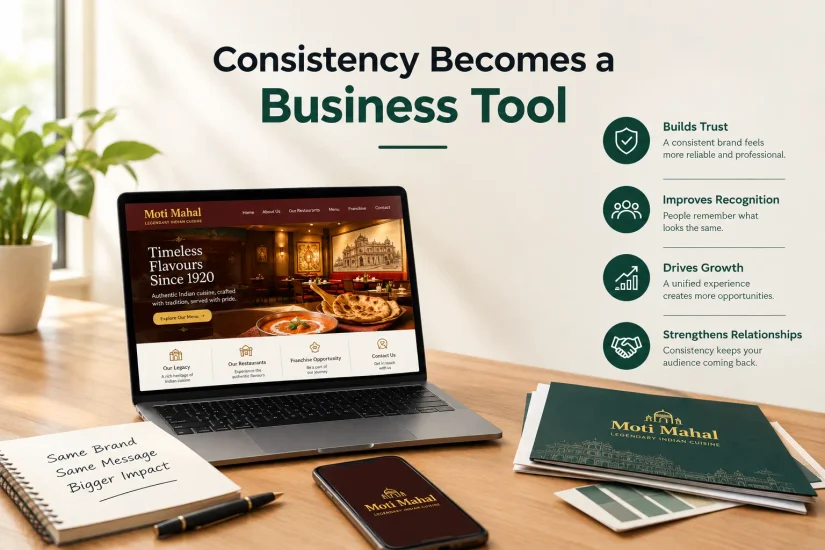
Consistency sounds like a simple word.
In a restaurant, it isn’t.
A dish might taste excellent on Monday and completely different on Saturday if there is no proper system.
The chef changes.
The ingredients change.
The measurements change.
The cooking process changes.
Eventually, customers notice.
Moti Mahal’s published information places emphasis on training, quality control and standardised processes as part of its franchise system. Its franchise materials also mention structured training, automated systems and audit controls.
This is one of the less glamorous parts of restaurant franchising, but probably one of the most important.
A restaurant brand can have a famous recipe.
But a franchise system needs a repeatable process.
That is what helps turn a recipe into a business system.
6. Training Is Not Treated as a One-Time Thing
Hiring restaurant staff is easy compared with retaining and training good restaurant staff.
People leave.
New employees join.
A new outlet may have an entirely different team six months later.
So training cannot really be a one-time activity before opening day.
Moti Mahal’s franchise offering includes training and ongoing support, with the company highlighting complete restaurant training and franchise assistance.
This matters particularly for people who are new to the restaurant industry.
You may understand business.
You may understand investment.
But running a restaurant involves hundreds of small decisions that are difficult to learn from a spreadsheet.
How should the kitchen move during a busy dinner?
How should staff handle a customer complaint?
How should food preparation be organised?
How should inventory be monitored?
These are practical things.
And this is where operational training can make a real difference.
7. Moti Mahal Has More Than One Restaurant Format
Another interesting part of the Moti Mahal franchise opportunity is that the company does not present itself as having only one restaurant format.
Its franchise platform lists concepts including Moti Mahal, Kebab Trail, Food Truck Trail, Express, Dosa Trail, Biryani Trail, Wraps n Roll and other food concepts.
This is useful because not every market behaves in the same way.
A large metropolitan location may support a full-service restaurant.
Another location might work better with a smaller or faster format.
The right format depends on the city, location, customer profile, investment capacity and business plan.
For a franchise investor, having different concepts to discuss can make the conversation more practical than simply asking, “How much does a restaurant franchise cost?”
The better question is:
Which format makes sense for my market?
8. It Combines an Old Food Identity With Modern Restaurant Systems
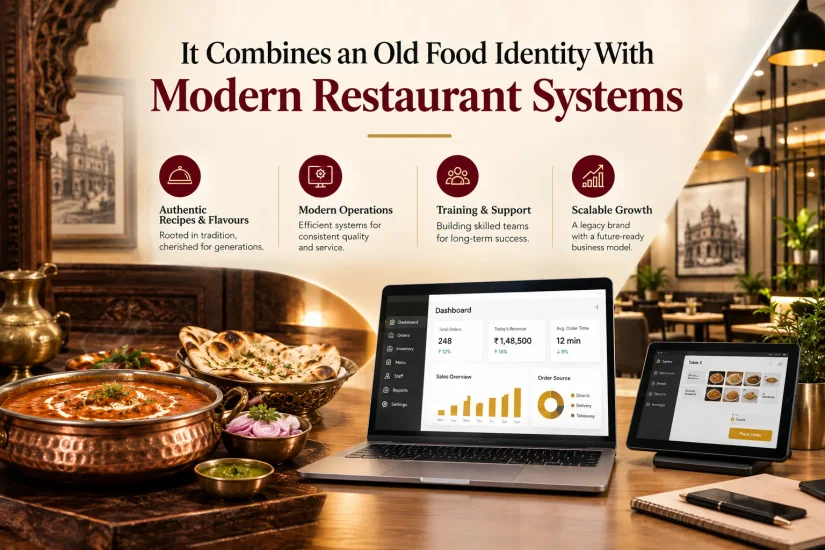
This is probably the most interesting part of the model.
Moti Mahal has a very traditional food identity.
But running a modern restaurant requires modern systems.
Billing systems.
Inventory tracking.
Audits.
Staff management.
Marketing.
Customer feedback.
Operational reporting.
Moti Mahal’s franchise information mentions automated systems, audit controls and structured operational support.
So the idea is not to run a 100-year-old restaurant exactly as it was decades ago.
It is to keep the food identity while updating the way the business is managed.
That balance is difficult.
Go too far toward tradition and the brand may feel outdated.
Go too far toward trends and the original identity can disappear.
A successful heritage franchise has to find the middle.
9. There Is a Bigger Hospitality Story Behind the Brand
Moti Mahal’s business is not limited to restaurants.
According to the company’s mission and vision information, Moti Mahal Management Services has also worked across hospitality, hotel management and food and beverage solutions.
This gives the brand a wider hospitality perspective.
Restaurant operations and hotel food and beverage operations are different, but they share many fundamentals:
- Staff management
- Guest experience
- Food quality
- Procurement
- Cost control
- Service standards
- Operational discipline
For someone looking at Moti Mahal as a business opportunity, this wider hospitality experience is worth understanding.
It shows that the brand’s business model is not based only on opening restaurants.
10. It Is About Ownership Without Doing Everything Yourself
This is perhaps the simplest way to understand the attraction of the Moti Mahal franchise.
Some people want to start a restaurant because they love food.
Some want to build a business.
Some want to invest in hospitality.
And some simply like the idea of owning a restaurant but don’t want to become a full-time restaurant operator.
These are different people.
The FOCO Hybrid structure is designed around the last group as well.
The franchise partner owns the business, while Moti Mahal’s team takes on the operational side.
That does not mean the investment is risk-free.
No restaurant business is.
Location can make a huge difference. Rent matters. Local competition matters. Customer demand matters. Investment planning matters.
But having an experienced operating team can remove some of the daily operational burden.
11. Why Monish Gujral’s Role Matters
A franchise system is ultimately only as good as the system behind it.
Monish Gujral has been closely associated with the modern expansion of the Moti Mahal brand. His own biography describes his role as custodian of the brand and Managing Director of Moti Mahal Delux Management Services, while also crediting him with expanding the business from its earlier Delhi presence into a much larger international restaurant and franchise network.
What makes his role interesting is the combination of preservation and change.
The old identity remains important.
But the business model has evolved.
That is probably one of the reasons the Moti Mahal franchise story is different from simply licensing a restaurant name.
What Should You Check Before Taking a Moti Mahal Franchise?
Even if a franchise looks attractive, don’t rush into it.
Before investing, ask practical questions.
Check the location
A strong brand cannot completely fix a poor location.
Understand the local market, nearby competition, customer profile, parking, visibility and expected footfall.
Understand the investment
Ask for the complete investment structure, not just the franchise fee.
Understand setup costs, equipment, interiors, working capital, deposits, management fees and other expenses.
Understand the operating model
If you are considering the FOCO Hybrid model, ask exactly what the company manages and what remains the franchise owner’s responsibility.
Ask about training
Find out how pre-opening training works and what support is provided after launch.
Understand the agreement
Read the franchise agreement carefully.
Ask about tenure, renewal, territory, fees, exit conditions, responsibilities and performance expectations.
Don’t make decisions only because of the brand name
A famous name helps.
But a restaurant still needs the right location, proper execution and sensible financial planning.
That part never changes.
Is a Moti Mahal Franchise Right for Everyone?
Probably not.
And that is okay.
Someone who wants complete creative freedom over every recipe, design element and business decision may prefer starting an independent restaurant.
But someone who wants to enter the restaurant industry with an established culinary identity, structured systems and company-managed operations may find the Moti Mahal model more suitable.
The important thing is to understand what you are actually buying.
You are not simply buying a signboard.
You are looking at a combination of:
Brand + menu + operating systems + training + support + restaurant management.
That combination is what makes the opportunity worth examining.
Why the Moti Mahal Franchise Stands Out
When you put everything together, the uniqueness of the Moti Mahal franchise becomes clearer.
It is not only the age of the brand.
It is not only Butter Chicken or Tandoori Chicken.
And it is not only the name of Monish Gujral.
The more interesting part is how the traditional Moti Mahal identity has been turned into a structured franchise business.
A franchise partner can bring the investment and local market opportunity.
The company brings the brand, operating experience, systems and restaurant management support.
That is the basic idea behind the FOCO Hybrid model.
And for people who have been thinking about entering the restaurant business but feel nervous about managing every little thing themselves, this model gives them another option to consider.
Frequently Asked Questions
Monish Gujral is associated with the modern development and expansion of the Moti Mahal brand. He is described by Moti Mahal as the custodian of the brand and has been involved in expanding its restaurant and franchise business.
One of the key differences is the FOCO Hybrid model, where the franchise partner owns the business while the company manages the restaurant’s operations.
FOCO means Franchise Owned, Company Operated. In Moti Mahal’s model, the franchisee owns the outlet while the company manages day-to-day operations.
Restaurant experience can certainly help, but Moti Mahal’s franchise offering includes training and operational support. Whether a particular applicant is suitable depends on the franchise discussion and business requirements.
Yes. Moti Mahal lists complete restaurant training and franchise assistance among its franchise support offerings.
Yes. Its franchise platform presents multiple concepts and formats, including Moti Mahal, Express, Kebab Trail, Dosa Trail, Biryani Trail and others.
You can visit the official Moti Mahal website and submit a franchise enquiry to discuss the available models, investment requirements, locations and other details.
Thinking About a Moti Mahal Franchise?
If you have been thinking about entering the food and hospitality business, it is worth understanding the opportunity before making a decision.
Moti Mahal brings together a long-standing Indian food identity with a structured franchise system and company-managed operations under its FOCO Hybrid model.
If that sounds like the kind of restaurant business you have been looking for, you can explore the official franchise opportunity and contact the Moti Mahal team directly.
Explore the Moti Mahal franchise opportunity:
Visit the official Moti Mahal website
Take the first step, understand the model, ask your questions and see whether the Moti Mahal franchise makes sense for your city and business plans.