

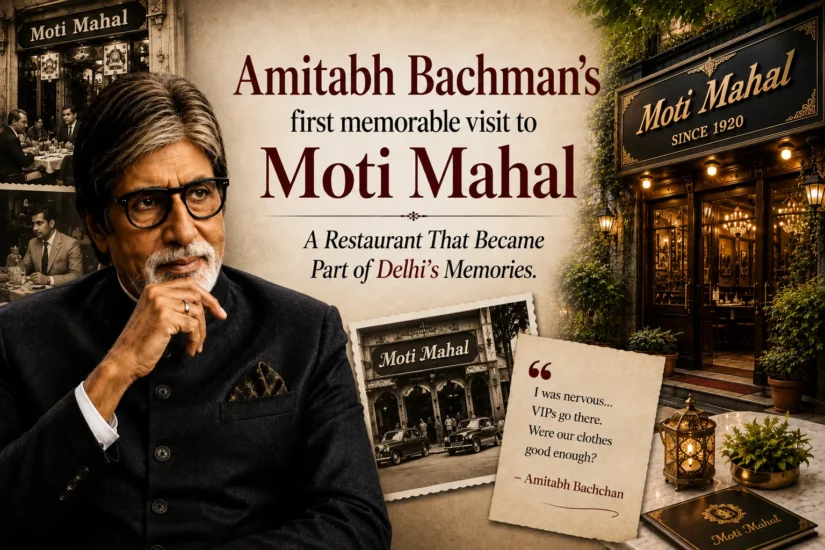
Amitabh Bachman’s first memorable visit to Moti Mahal
There are restaurants where people go simply because they are hungry. And then there are restaurants that become part of people’s memories.
Moti Mahal belongs to the second category.
For generations of Delhi families, visiting Moti Mahal was not just about sitting down for a meal. It could be a special dinner with parents, a celebration, a first experience of fine dining or simply an occasion when the family wanted to eat somewhere that felt different from the usual.
A recent story shared by Amitabh Bachchan brought this feeling back into focus.
Even Amitabh Bachchan Had His First Restaurant Moments
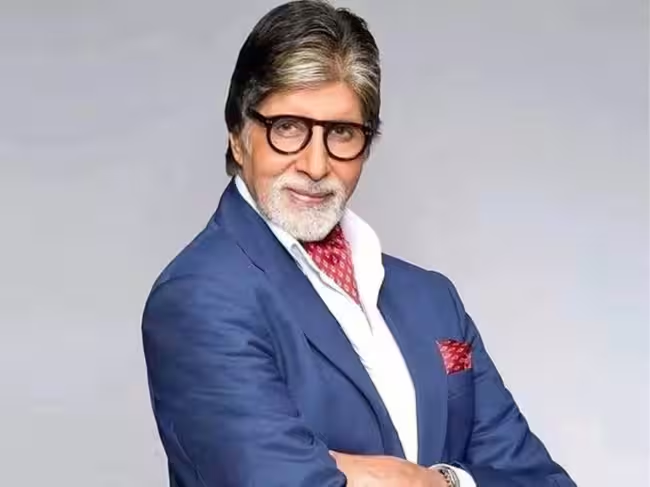
While appearing on Kaun Banega Crorepati, Amitabh Bachchan recalled a memory from his younger days when he had started earning and wanted to take his parents out for a meal.
The restaurant he remembered was Delhi’s iconic Moti Mahal.
What makes the story interesting is that Bachchan was not talking about the experience as a celebrity. He was remembering it as a young man who wanted to do something special for his parents.
According to the Economic Times report, he remembered feeling nervous before entering the restaurant. Moti Mahal was seen as a place where VIPs and well-known people went, which made him wonder whether he and his family were dressed appropriately and how they would be perceived.
That small detail makes the story relatable.
Because almost everyone has had a moment when they walked into a new place and wondered, “Do I belong here?”
But good hospitality has a way of making that feeling disappear.
Moti Mahal Was More Than Just a Restaurant
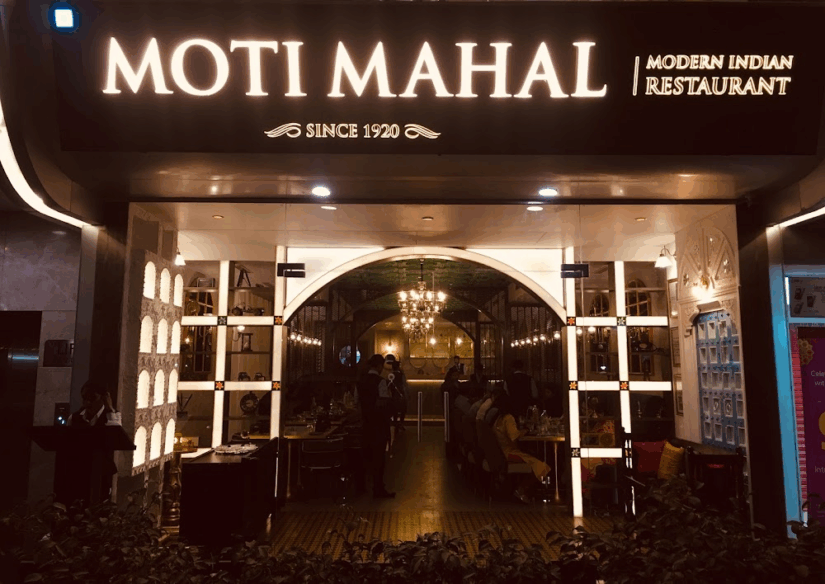
The story also says something about the position Moti Mahal held in Delhi’s dining culture.
Moti Mahal’s story goes back to Kundan Lal Gujral, who started his culinary journey in Peshawar before establishing Moti Mahal in Delhi after Partition. The brand became closely associated with tandoori cooking and iconic North Indian dishes.
Over the years, the restaurant became a destination for people from very different backgrounds.
Its history includes visits from prominent personalities, political leaders and international guests, helping turn the restaurant into one of the recognised names associated with Indian cuisine.
But perhaps the more important part of a restaurant’s history is not always found in the names of famous guests.
It is found in ordinary families.
A father taking his children out for dinner.
A son treating his parents after receiving his first salary.
A family celebrating a birthday.
Friends meeting after years.
A couple choosing a restaurant for an important evening.
These are the moments that quietly build the reputation of a restaurant.
Why Amitabh Bachchan’s Story Feels So Personal
Celebrity stories often focus on luxury, fame and exclusive experiences.
This one was different.
Amitabh Bachchan’s memory was about his parents.
He had started earning and wanted to take them somewhere special. He remembered the nervousness that came with entering a restaurant he considered a place for VIPs.
That makes the story less about celebrity culture and more about family.
It also shows how restaurants can become markers of different stages in a person’s life.
For someone, Moti Mahal may have been a childhood restaurant.
For another person, it may have been the place where they took their parents for the first time.
For someone else, it could simply be where they had their first taste of butter chicken, tandoori chicken or dal makhani.
The food may be remembered, but the occasion often stays longer.
The Food That Helped Build the Legacy
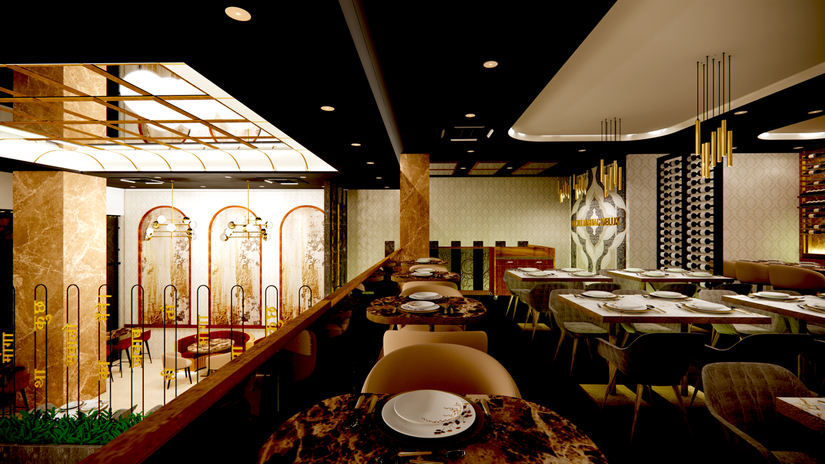
Moti Mahal’s legacy is strongly connected with Kundan Lal Gujral and the evolution of tandoori cooking.
The brand’s official history describes how Gujral developed and popularised tandoori cooking and went on to create dishes including butter chicken and dal makhani.
These dishes eventually travelled far beyond Delhi.
What started with traditional cooking techniques and recipes became part of the way Indian food is recognised around the world.
That is one reason the Moti Mahal name has continued to remain relevant.
The restaurant did not build its identity around trends alone. It built it around food that people remembered.
From a Delhi Restaurant to a Growing Hospitality Brand
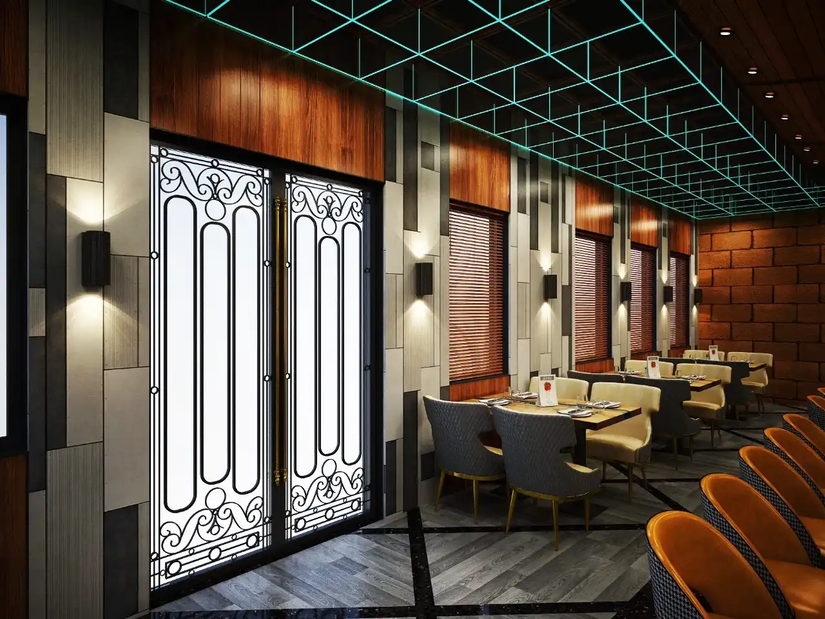
Moti Mahal’s story did not stop with one restaurant.
The brand later moved into the franchise model, with Monish Gujral playing an important role in expanding the business while maintaining its culinary identity. The official Moti Mahal history says the management services company was established in 2003 with the objective of expanding through franchises.
Expansion, however, brings its own challenge.
How do you make sure that a dish people loved at one location continues to taste familiar somewhere else?
For Moti Mahal, consistency became an important part of the operating model. The brand states that chefs and food-and-beverage staff at franchise locations are trained by the parent company, with standardised recipes and procurement processes used to maintain consistency.
That is important because a restaurant franchise is not only about putting a familiar name on a storefront.
The experience has to feel familiar too.
A Restaurant Can Become Part of Someone’s Story
This is perhaps the biggest takeaway from Amitabh Bachchan’s memory.
People don’t always remember every restaurant they have visited.
But they remember the restaurants connected to something meaningful.
The first time they took their parents out.
The celebration after getting a new job.
The dinner after an important achievement.
The family gathering that everyone still talks about.
The meal they had with someone who is no longer around.
Food becomes part of those memories.
And that is what makes an old restaurant different from a restaurant that simply has been around for a long time.
A legacy is created when people continue to attach their own stories to a place.
Moti Mahal’s Legacy Continues
From its beginnings in Peshawar to its establishment in Delhi and its expansion into the modern hospitality and franchise business, Moti Mahal has gone through many changes.
But one thing has remained central — food bringing people together.
Amitabh Bachchan’s recollection is another small but memorable chapter in that larger story.
He may have entered Moti Mahal decades ago wondering whether he and his family belonged in a restaurant filled with VIPs.
Years later, that very memory has become a reminder of something much simpler.
A good restaurant should make people feel welcome, no matter who they are.
And perhaps that is one of the reasons Moti Mahal continues to hold a special place in the memories of people who have walked through its doors.
Final Thought
Restaurants are built with kitchens, menus, chefs and dining rooms.
But their real legacy is built by people.
Every family dinner, every celebration and every first visit adds another story.
And sometimes, decades later, even a superstar remembers that first dinner with his parents.
That is the kind of memory that turns a restaurant into a part of history.